
Member Interview: Danielle King
Danielle M. King, M.Ed., is a Clinical Mental Health Counselor in Vermont specializing in perinatal mental health, including pregnancy, postpartum adjustment, and pregnancy or infant loss.
She works with individuals navigating the emotional complexities of parenthood, as well as those impacted by trauma, anxiety, and disordered eating. Danielle offers a compassionate, trauma-informed approach that is collaborative and nonjudgmental, helping clients feel supported through vulnerable and often overwhelming life transitions.
Her work integrates Internal Family Systems (IFS) with cognitive and behavioral strategies and is grounded in intuitive eating and a weight-inclusive, Health at Every Size® (HAES) framework.
Danielle is especially attuned to the intersection of identity, body changes, and emotional well-being during the perinatal period, supporting clients in reconnecting with themselves and building a greater sense of balance and self-trust.
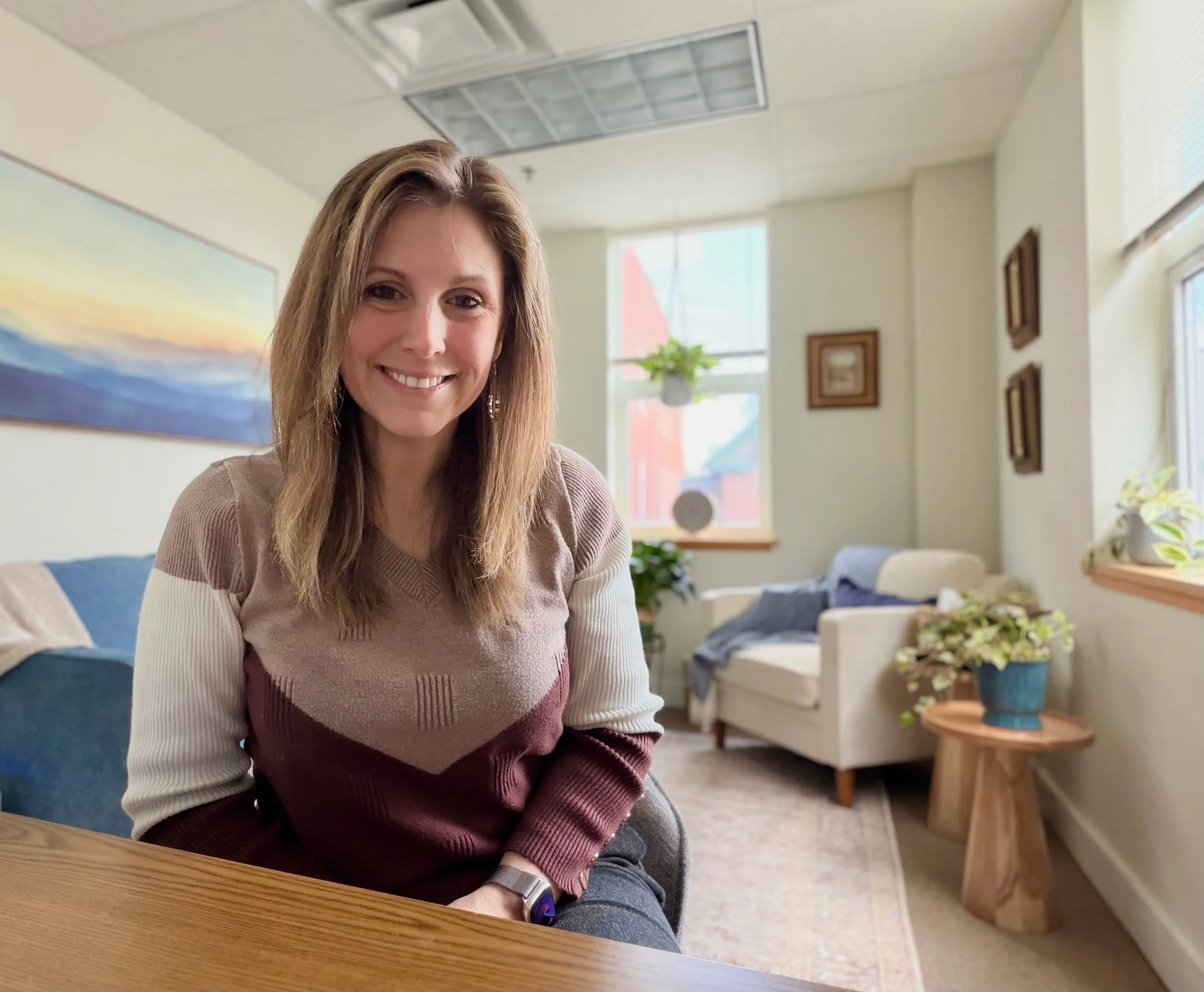
Danielle King sees clients in-person in Randolph VT, or telehealth all over the state
What services do you offer to folks during conception, pregnancy, birth, or postpartum?
I offer individual therapy for people navigating conception, pregnancy, postpartum, and early parenting, including perinatal mental health, pregnancy after loss, and experiences of miscarriage, stillbirth, or infant loss. I also specialize in eating disorders and body image, supporting a more compassionate relationship with food and the body. My approach is trauma-informed and integrates IFS and CBT, as well as intuitive eating when applicable.
How did you get into your line of work?
It was both. I’ve always been drawn to this work, and over time my focus shifted to the perinatal period. My own experiences with miscarriage and stillbirth, anxiety during pregnancy after loss, and recovery from disordered eating deepened my understanding of how complex this time can be. At the same time, I’m intentional about not sharing my own story in sessions. My role is to keep the focus on my clients—their experiences, their needs, and their process.
What do people think you do to support folks?
Some people assume my role is to offer advice or quick solutions. In reality, the experiences people have during pregnancy and postpartum are often more complex than that.
What do you actually do to support folks?
My work is collaborative and focused on helping people feel understood. I support clients in making sense of their emotions and experiences, including parts of them that feel anxious, overwhelmed, self-critical, or carry shame or guilt. I also offer practical tools for regulation, grounding, and managing intrusive thoughts.
What is something that you feel like you are uniquely able to help people with?
I bring both specialized training and lived experience to my work, which allows me to support people in a deeply attuned and meaningful way. I have advanced training in perinatal mental health, trauma-informed care, and eating disorders, and I integrate approaches like IFS, CBT, DBT, and Intuitive Eating to help clients move out of shame and toward greater self-compassion. My personal experiences with miscarriage, stillbirth, pregnancy after loss, and recovery from disordered eating also give me a grounded understanding of how complex and layered this time can be—while keeping the focus on each client’s unique experience.
What is the one piece of advice you find yourself telling people over and over again?
You don’t have to do this alone—and you’re not doing it wrong.
What are the top 3 questions people ask when they first start to work with you for support?
1. “Is what I’m feeling normal?” Yes—these experiences are more common than they seem, even if they feel overwhelming.
2. “Why am I so impatient or angry?” Irritability is often a sign of overwhelm, anxiety, sleep deprivation, or unmet needs—especially during pregnancy and postpartum.
3. “Is it normal to struggle with my body or eating during pregnancy or postpartum?” Yes. This time can bring up a lot, especially with a history of disordered eating.
Are there any other things about your work you want share with us that we have not asked already?
Pregnancy and postpartum don’t always feel the way people expect. Alongside joy, there can be anxiety, grief, identity shifts, or challenges with food and body image. Healing often begins with feeling more supported, understood, and connected to yourself.
