
More Than Postpartum Depression: Anxiety, Rage, and the Identity Shift of New Motherhood
Expert insights from seasoned Vermont Birth Network professionals
“I didn't expect it to feel like this.”
It's something many parents think, but don't always say out loud.
Maybe you planned for this baby for years. Maybe the pregnancy or delivery was hard. Maybe things are going well, and you still feel caught off guard by your emotions more often than you'd like.
Becoming a mother is one of the most significant things a person can go through — and the emotional and mental health weight of it is bigger than most people prepare for.
Hayden Elmendorf, LCMHC, PMH-C, a perinatal mental health counselor at Little Moon Counseling, puts it plainly: "I don't believe it's possible to go through the transition to parenthood and not be significantly changed on the other side. It’s a huge stressor, both positive and challenging."
A note: while this article uses the word "mother," we know that not everyone who gives birth identifies that way. Whatever your experience looks like, this space is for you.
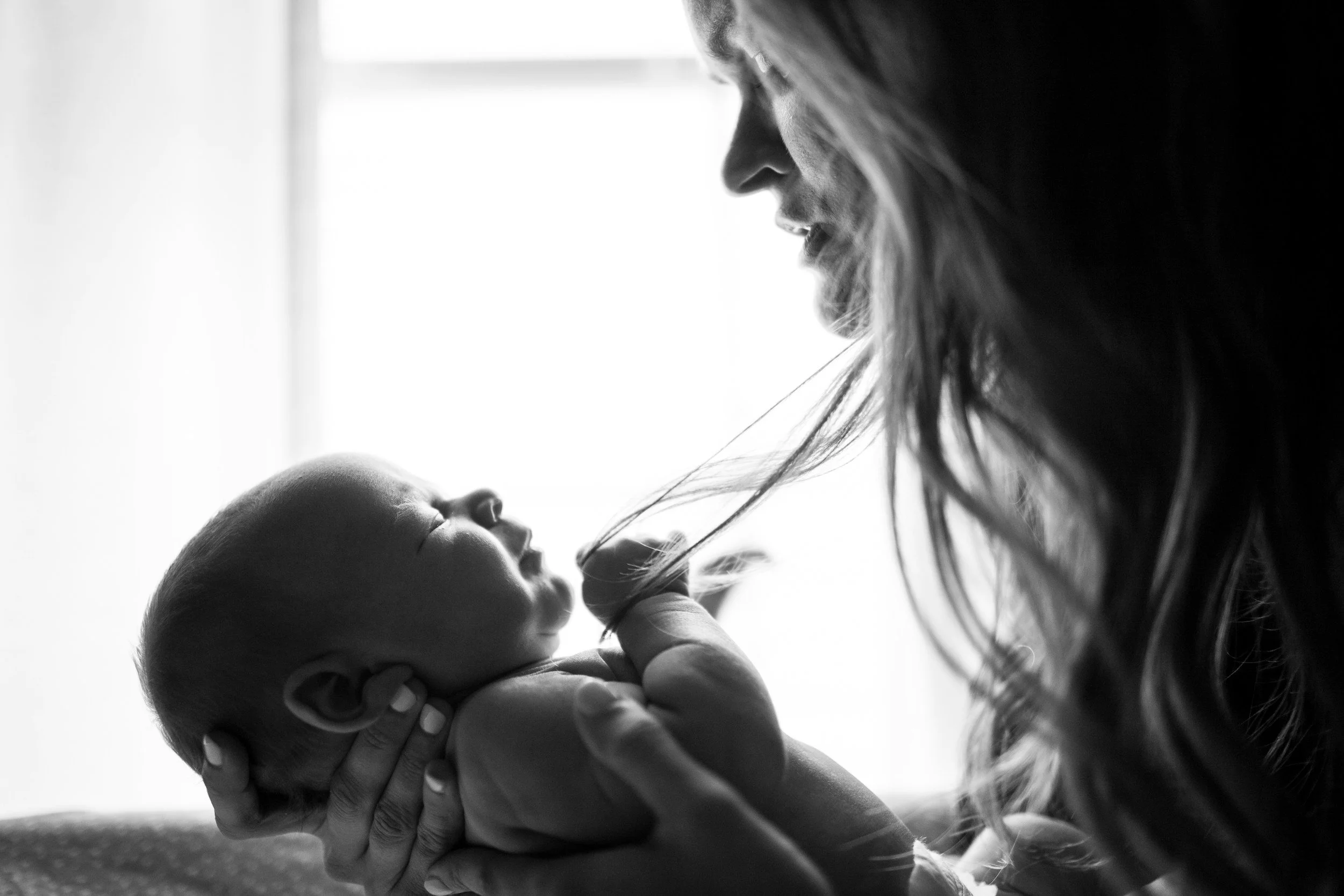
You are allowed to feel it all: overjoyed & overwhelmed.
It's Not Just Postpartum Depression
Many parents become aware of postpartum depression (PPD) during pregnancy. PPD often comes up at the 6-week follow-up, and it's one of the most talked-about parts of the postpartum experience. PPD typically shows up as persistent sadness, low motivation, difficulty bonding, or a sense of hopelessness that lingers beyond the first couple of weeks after birth.
It's worth distinguishing PPD from the "baby blues" — the tearfulness, mood swings, and emotional sensitivity that many mothers experience in the first one to two weeks postpartum. The baby blues are extremely common and typically resolve on their own as hormones stabilize. PPD is different: it's more intense, lasts longer, and doesn't lift without support.
For a deeper look at what postpartum depression can look like and how to support someone through it, read Postpartum Depression: Myths and How You Can Support a Loved One
But PPD is far from the only mental health experience mothers face — and "depression" doesn't always capture the full picture. Beyond PPD, there's a whole range of experiences worth naming:
Postpartum anxiety (PPA) — persistent worry, racing thoughts, difficulty relaxing, or a constant sense that something is wrong
Postpartum rage — sudden, intense anger or irritability that feels out of character
Postpartum PTSD — which can stem not just from birth, but from the overall weight of the perinatal experience
Intrusive thoughts, emotional numbness, or grief — experiences that don't always fit a clinical label, but are still real and still hard
These exist on a spectrum. You don't have to be at the severe end to have a name for what you're feeling — or to benefit from help.
What Postpartum Anxiety (PPA) Really Feels Like
For many mothers, anxiety is one of the most constant — and least recognized — parts of early parenthood.
It doesn't always look dramatic. More often, it shows up as a steady hum in the background: a mental list you can't turn off, worry about your baby, your body, your decisions. A sense that you should be able to relax, but can't quite get there. Because it can look like being attentive or prepared, postpartum anxiety is often easy to miss, even for the person experiencing it.
Aubrey Carpenter, PhD, a licensed clinical psychologist at Mountain View Psychology, explains that this anxiety often comes from a deeply rooted place. "We are biologically driven to feed and care for our young, and when we can't do it alone — or it feels more challenging than expected — we can experience intense anxiety that comes from a very deep-rooted place."
That anxiety doesn't mean something is wrong with you. It means your system is trying to keep up with a level of responsibility it's never held before.
What Postpartum Rage Is Really About
Of all the postpartum experiences that go unnamed, rage might be the one that carries the most shame.
If you've felt sudden, intense anger at your partner, at a situation, or at nothing in particular, you're not alone, and you're not a bad mother.
Hayden notes that anxiety and rage often go hand in hand. "We often turn to anger and blame to feel less anxious," she explains. The anger isn't random; it's often a signal from a nervous system that's been carrying too much for too long.
Aubrey uses the image of an iceberg. What shows up on the surface is irritability or yelling, but underneath are unmet needs, overwhelm, and emotional strain that has built over time. Postpartum rage, she says, is often a sign that the current pace isn't sustainable, and that both you and your baby deserve more.
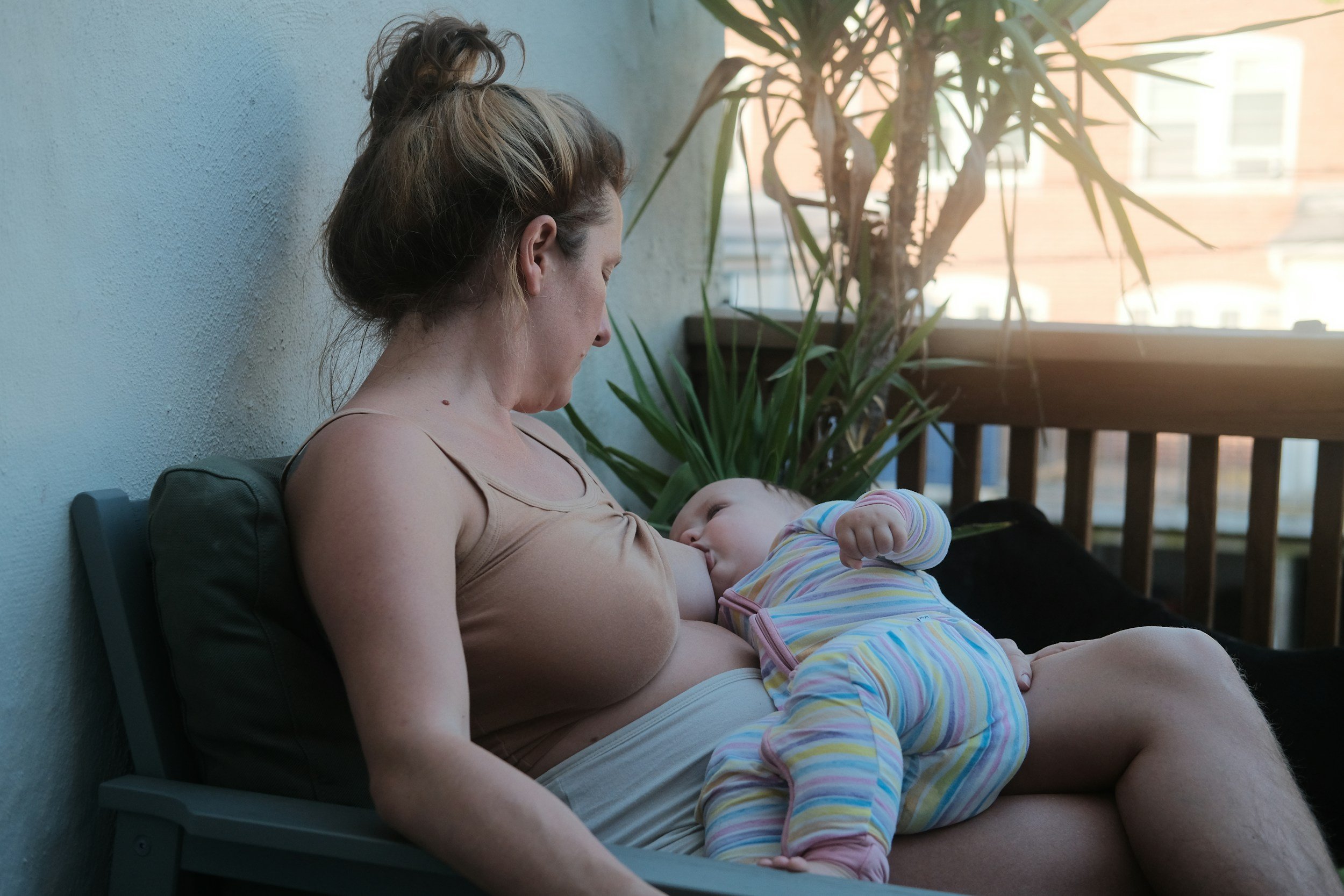
Learning to care for your new baby and your needs is a process.
Matrescence: The Identity Shift No One Prepares You For
There's a concept called matrescence — the psychological, emotional, and physical process of becoming a mother. Like adolescence, it's a process, not a singular event. And like adolescence, it can feel disorienting in ways that are hard to put into words.
Aubrey sees this in her clients constantly. Many mothers come in feeling burnout, overwhelm, or hopelessness, and assume it must be something they're doing wrong. In reality, they're learning how to be a different version of themselves — while caring for a new human, with shifting hormones, likely without adequate sleep, and without the sense of control they're used to.
"Learning to manage mental health, ask for support, and navigate new roles and responsibilities are some of the skills that can make a world of difference in optimizing a sense of well-being and control in their parenting journey," she says. And she means learning; these skills don't always come naturally or overnight, which is exactly why support helps.
Additionally, That shift from having control over your own life to having your days revolve around a newborn is its own kind of loss, even when you love your baby fiercely.
Hayden shares that her own experience of becoming a parent as feeling like the "undoing and dismantling" of a self she had spent decades building — a feeling she now sees regularly in the parents she works with.
Aubrey echos that much of the postpartum experience involves the gap between what we expected and what actually happens. That gap can bring up real grief, even in the presence of deep love.
Feeling lost or uncertain isn't a failure to adjust. It's evidence of how much this transition actually asks of you.
One thing both providers emphasize: early parenthood doesn't come with a pause button. "It really is all-consuming," says Hayden. "There's no real break from the emotional, physical, and mental shifts happening all at once; no amount of preparation can fully prepare you for what it feels like to be in it."
Rather than trying to prepare perfectly, she encourages something different: flexibility, curiosity, and a willingness to discover what this experience actually is as you move through it.
A Note on Relationships
This transition doesn't just affect how you feel internally; it can also shift your relationship with your partner if you have one. You may feel more distant, more reactive, or more focused on managing the day-to-day than staying connected. This is incredibly common, especially when so much energy is going toward recovery and caring for a new baby.
If this resonates, we shared more about this experience in the blog post:
When a Baby Changes Your Relationship (and Why That's Normal)
And next month, we're looking at the mental health experience from a non-birthing partner's perspective.
You Don't Have to Hit a Crisis Point to Ask for Help
There's a wide range between "I'm doing fine" and "I'm in crisis" — and many mothers fall somewhere in between. You might not feel like you're falling apart, but you might not feel quite okay either. That's a valid place to ask for support — and in many ways, it's the best time to do it.
"If you feel like you need support, you need it. Point blank," says Hayden. "For the longest time, I myself thought I didn't need it because my experience didn't fit the checklist of symptoms for PPD — when in reality, I needed it yesterday."
Aubrey agrees. "We do not need to meet criteria for a disorder to benefit from tools like deep breathing, getting out into nature, or seeing friends and family in whatever capacity we are up for. If you are struggling, know that your community and healthcare providers are here for you."
If you're not sure where to start, browse the Vermont Birth Network directory to find local providers and resources. You deserve care, attention and support as you learn to be a mother.