
Postpartum Depression in Dads and the Mental Health Reality of New Fatherhood
Compassionate insights from Vermont Birth Network professionals
The feeling of needing to hold it all together is something many dads and non-birthing partners experience after a baby arrives.
While much of the attention naturally goes toward the birthing parent and baby, many partners are quietly navigating their own overwhelm, identity shifts, and emotional adjustment to parenthood too.
Keegan Albaugh, Executive Director of Dad Guild, says many fathers feel guilty taking up emotional space after a baby arrives because “they aren’t the one who pushed a human out of their body.” Many feel like they should simply be grateful and keep pushing through — even when they’re struggling too.
Last month, we talked about maternal mental health and the emotional realities of becoming a mother. But the transition to parenthood (or adding another baby to your family) affects the whole family, and dads and non-birthing partners deserve support too.
Alongside the joy and love of welcoming a baby, many fathers and partners are also navigating anxiety, identity shifts, relationship changes, exhaustion, and a quiet feeling that they’re struggling more than they expected to.
A note: while this article uses terms like “dads,” “fathers,” and “non-birthing partners,” we know every family and identity is different. Whatever your role or experience looks like, this space is for you.
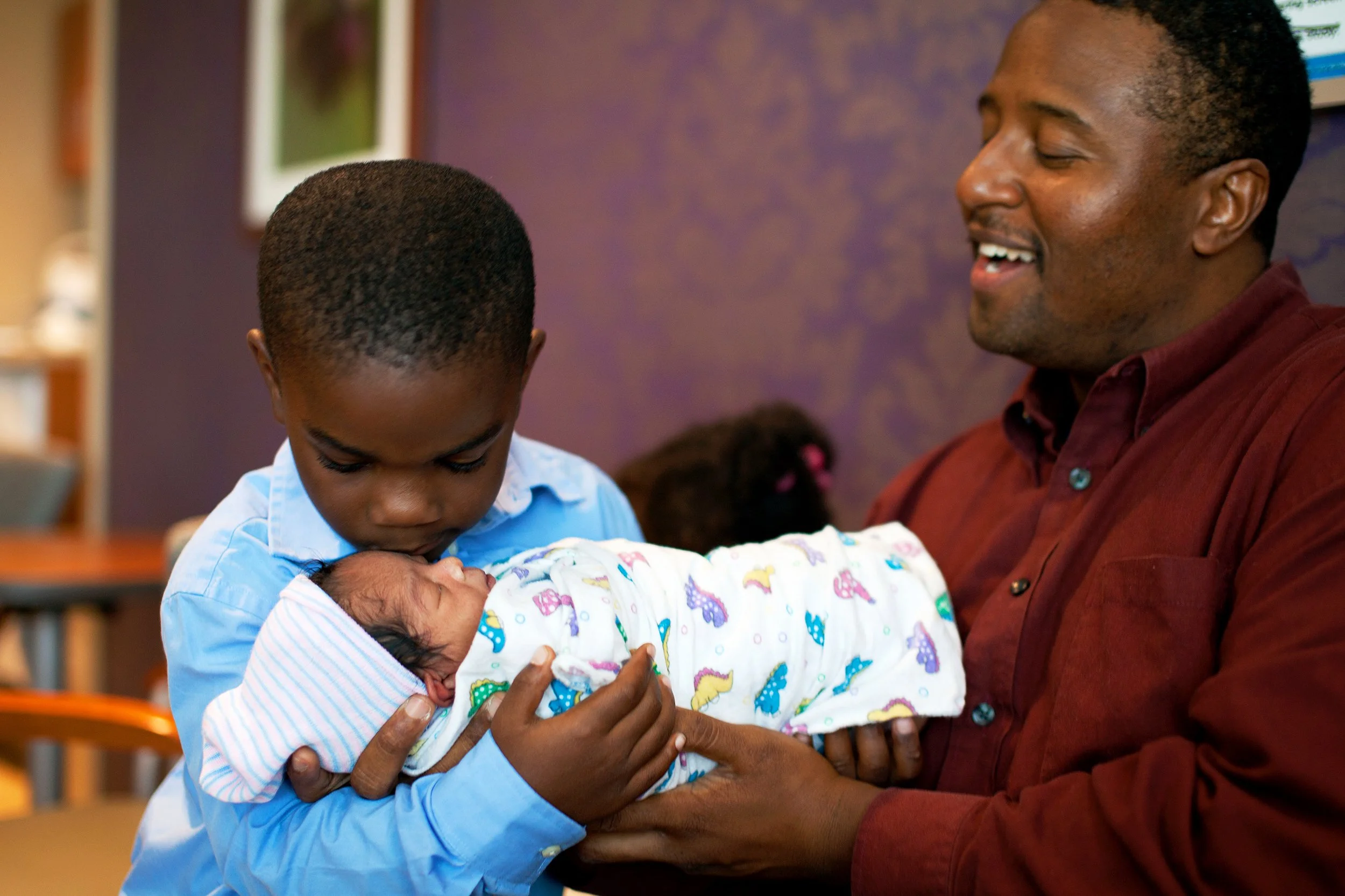
photo credit: Heather Gallagher Photography
Postpartum Depression and Anxiety in Dads and Non-Birthing Partners
When people talk about postpartum mental health, the focus is usually on the birthing parent. And for good reason! Recovery from pregnancy and birth is enormous physically, emotionally, and hormonally.
But postpartum depression in dads and non-birthing partners is real too.
“Honestly, I see many partners struggle with postpartum depression,” says Hayden Elmendorf, LCMHC, PMH-C, a perinatal mental health counselor at Little Moon Counseling. Research suggests that about 1 in 10 non-birthing partners experience postpartum depression, and involved partners can even experience hormonal changes themselves during the transition to parenthood.
And it doesn’t always look the way people expect.
“Anecdotally, I see partners struggling with anxiety, anger, and heightened irritability that masks underlying depression,” Hayden explains.
Feeling like they’re not “allowed” to struggle often adds another layer of isolation.
The Identity Shift and Invisible Pressure of Fatherhood
While we’re beginning to talk more openly about “matrescence” and the emotional transition into motherhood, there’s often far less language or support around the identity shift that happens for dads and non-birthing partners.
Many fathers and partners are adjusting to an entirely new version of themselves — caregiver, co-parent, provider, protector, partner — while also trying to hold onto the parts of themselves that existed before the baby arrived.
Kimberleigh Weiss-Lewit, MA, IBCLC, PMH-C, says she often sees partners balancing “intense pressure to provide and protect” while also trying to navigate exhaustion, changing relationship dynamics, and the adjustment of becoming a parent themselves.
Many deeply want to be involved in caring for their baby — but don’t always know what that role is supposed to look like.
That uncertainty can leave partners feeling both needed and invisible at the same time.
Keegan says the transition into fatherhood can feel abrupt. Work responsibilities continue while responsibilities at home multiply. Routines, friendships, hobbies, and relationships all shift at once, and it can feel overwhelming, even when they’re excited about this new stage and role.
When Your Relationship Changes After Baby
One of the most emotionally complicated parts of early parenthood can be what happens to the relationship itself.
Many couples miss each other while living side-by-side.
Hayden describes this as one of the hardest parts of becoming a parent because “the relationship takes a big backseat during those early months and even years.” Between recovery, feedings, sleep deprivation, and caring for a baby, “the logistics of connecting amidst all the new responsibilities and chaos of babies can feel impossible.”
Kimberleigh says partners often express wanting more closeness and connection but not knowing how to navigate the changes in their relationship, especially if they never had healthy models for communication during stressful or vulnerable periods growing up.
Hayden encourages couples to remember that this season is temporary. “The relationship may not be the focus right now,” she says, “but it is still there, and you will find each other again.”
If this resonates, we shared more about this experience in the blog post:
When a Baby Changes Your Relationship (and Why That’s Normal)
Why Community Matters for Dads and New Fathers
The reality is that new parenthood is often both beautiful and overwhelming at the same time.
As Kimberleigh puts it, “It is hard, not because they are doing something wrong, but because it just is.”
And sometimes, navigating that hard requires extra support. “Both parents being supported helps the whole system function better,” agrees Hayden.
One thing all three providers emphasized was the importance of community and honest connection for dads and non-birthing partners, especially because so many are quietly struggling in isolation.
Keegan says that many dads simply aren’t talking honestly about how they’re doing. “All it takes is an authentic ‘how are you doing?’ before the person talks for 10 minutes straight and then mentions how they never talked about any of this with anyone.”
He encourages dads to proactively build their own villages, even if they don’t feel like they’re struggling currently. Support can look like therapy, a dads’ group, couples counseling, or simply being honest about how hard this season can feel with trusted friends.
The transition into parenthood changes both parents, even if those changes don’t always look the same.
And while dads and non-birthing partners are often expected to quietly hold everything together, they deserve support too.
Because struggling during this season doesn’t mean you’re failing. It means you’re navigating one of the biggest identity shifts and life transitions a person can experience.
And no one is meant to do that alone.
If you’re looking for support, Vermont Birth Network’s directory includes local resources such as mental health providers and dads’ groups to help parents navigate this transition.